Ever clicked on a website, waited and waited only to give up because it felt slower than a snail on a lazy Sunday? If yes, you already know the frustration and why businesses lose visitors in seconds! That’s why the question, “How Important is Page Speed for SEO” is more than just a techie debate; it’s a make-or-break factor for your website. Page speed isn’t just about satisfying impatient visitors; it directly influences your Google rankings too. A slow-loading website can push your pages down in search results, while a fast, smooth site delights users and earns Google’s trust. In short, boosting page speed improves both user experience and SEO performance. In this blog, we’ll dive into why page speed matters, how it affects your rankings, and What steps will our Best SEO agency in Mumbai take to supercharge your website speed.
What is Page Speed?
If you’ve ever wondered how important is page speed for SEO, it’s essentially the time your website takes to load for users. Fast-loading pages improve user experience and help your site rank higher on Google. Key components of page speed include:
- Time to First Byte (TTFB): Measures how long the browser waits to receive the first byte of data from the server.
- First Contentful Paint (FCP): The time it takes for the first piece of content (text, image) to appear on the screen.
- Largest Contentful Paint (LCP): Tracks how quickly the main content (like a hero image or headline) becomes visible.
- Cumulative Layout Shift (CLS): Measures how stable your page layout is while loading—no annoying shifts for users!
Desktop vs Mobile Page Speed: Mobile speed often differs due to network conditions and device limitations. Optimizing both is crucial for SEO and user retention. Fast page speed keeps users happy and improves rankings, making it a vital part of SEO strategy.
Why Page Speed Matters for SEO?
If you’ve ever wondered how important is page speed for SEO, here’s why it truly matters:
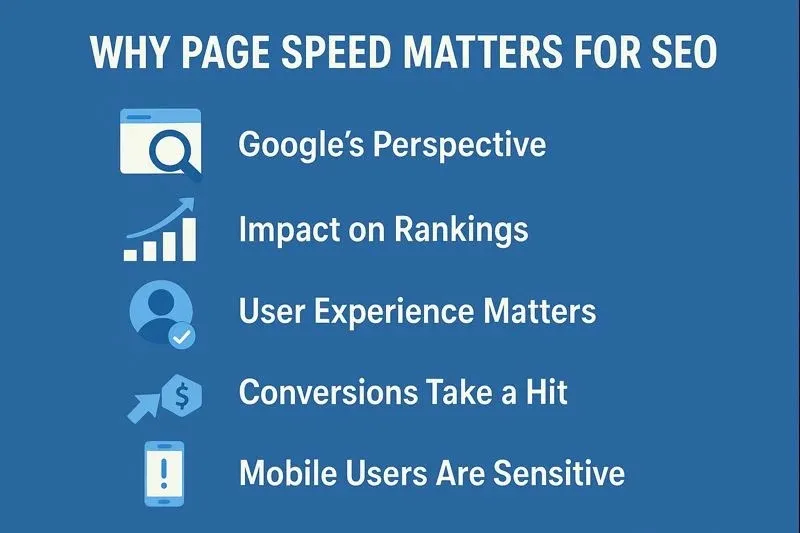
- Google’s Perspective: Google considers page speed as a ranking factor. Faster websites are favored in search results because they offer better user experiences.
- Impact on Rankings: Slow websites often rank lower. Pages that take too long to load may get less visibility, affecting organic traffic and overall SEO performance.
- User Experience Matters: Visitors prefer websites that load quickly. Slow-loading pages frustrate users, increasing bounce rates and reducing time spent on your site.
- Conversions Take a Hit:A 1-second delay in page load can reduce conversions by up to 7%. Slow speed can directly impact sales, leads, or sign-ups.
- Mobile Users Are Sensitive: With mobile traffic rising, a fast-loading website ensures smooth browsing on all devices, improving engagement and retention.
Page speed is a critical SEO factor that affects rankings, user satisfaction, and conversions. Optimizing your site for speed not only pleases Google but also keeps your visitors happy and engaged.
Page Speed & Google Rankings
If you’ve ever wondered how important is page speed for SEO, here’s a clear breakdown:
- Core Web Vitals & Google Updates: Google uses Core Web Vitals to measure user experience. Metrics like Largest Contentful Paint (LCP), First Input Delay (FID), and Cumulative Layout Shift (CLS) evaluate how fast and smoothly your site loads. Faster websites meet these standards, helping your rankings.
- Faster Websites Rank Higher: Google prefers websites that load quickly. A faster website reduces bounce rates, keeps users engaged, and signals quality to search engines, often resulting in better rankings.
- Mobile-First Indexing: Google now primarily uses the mobile version of your site for ranking. Mobile users expect speed—slow-loading mobile sites can hurt your position in search results.
- User Experience Matters: Page speed is not just a technical factor; it improves user satisfaction, encourages repeat visits, and increases conversions.
Page speed is a critical factor in SEO. Optimizing your website for fast loading times, smooth interactions, and mobile efficiency directly impacts your Google rankings. Understanding how important is page speed for SEO ensures you stay ahead in search results.
Factors That Affect Page Speed
If you’re wondering how important is page speed for SEO, knowing what slows down your website is the first step. A faster website not only improves Google rankings but also keeps visitors happy. Here are the key factors that affect page speed:
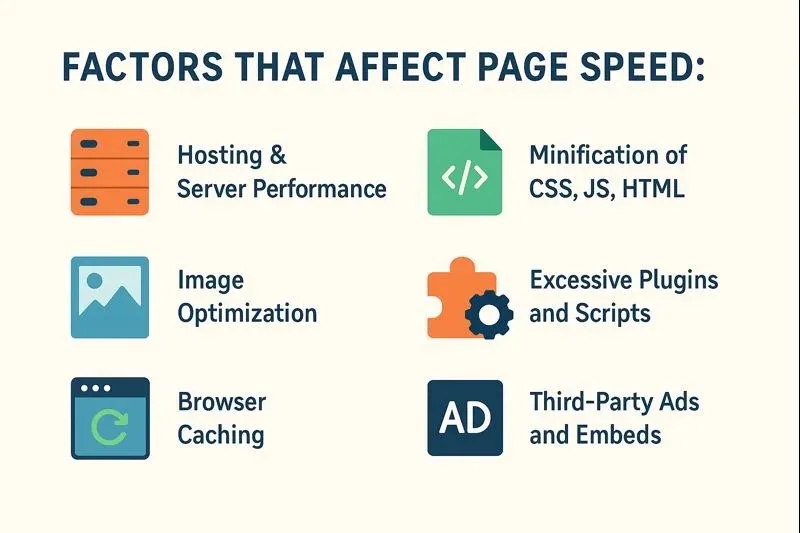
- Hosting & Server Performance: A slow or shared server can delay website loading. Choosing a reliable hosting provider ensures faster response times.
- Image Optimization: Large, uncompressed images take longer to load. Optimizing images by resizing and compressing them can significantly boost page speed.
- Browser Caching: When browsers store parts of your site, repeat visitors experience faster loading. Without caching, pages have to load everything from scratch each time.
- Minification of CSS, JS, HTML: Extra spaces, comments, and unnecessary code can slow down your site. Minifying these files reduces their size and improves loading speed.
- Excessive Plugins and Scripts: Too many plugins or scripts, especially on WordPress, can cause delays. Keep only essential ones to maintain speed.
- Third-Party Ads and Embeds: Ads, social media widgets, and other external scripts can slow your site. Limit them or use asynchronous loading to reduce impact.
Understanding these factors is crucial for faster websites. Improving them not only enhances user experience but also boosts your SEO.
How Scale Delight Can Help Improve Your Page Speed
If you’ve ever wondered how important is page speed for SEO, you’re not alone. A fast website not only improves Google rankings but also keeps your visitors happy. At Scale Delight, we focus on boosting your website speed with proven strategies:
- Website Speed Audit: We thoroughly analyze your site to identify issues that slow it down. This helps us create a clear action plan for improvement.
- Image Compression & Lazy Loading: Large images can drastically slow your site. We compress images and use lazy loading to ensure faster page display.
- Minifying CSS/JS: We reduce unnecessary code in CSS and JavaScript files, making your pages load quicker.
- Optimizing Server Response Time: A slow server can hurt your rankings. We improve server performance for faster responses.
- Reducing Render-Blocking Scripts: We fix scripts that delay page loading, ensuring your site appears quickly to users.
- Continuous Monitoring: Website speed is an ongoing effort. We keep monitoring and optimizing to maintain top performance and rankings.
By partnering with Scale Delight, you not only improve your page speed but also enhance SEO results and user engagement. Faster websites lead to higher traffic, longer visits, and better conversions. A speedy website is key to both Google rankings and happy users. Scale Delight ensures your site stays fast, efficient, and SEO-friendly.
Conclusion
Ever wondered what one small tweak could boost your entire website’s performance? The answer is simple speed. A fast-loading website isn’t just a bonus; it’s a game-changer. From improving user experience to helping you climb the SERPs, page speed directly affects how Google views and ranks your site. That’s why understanding How Important is Page Speed for SEO is essential for every business aiming to grow online. At Scale Delight, we specialize in turning slow, underperforming sites into high-speed, high-ranking machines. Our experts optimize your speed, enhance your Core Web Vitals, and ensure your website is fully prepared to win the SEO race. Ready to experience faster performance and better rankings? Partner with Scale Delight to optimize your site speed and climb Google rankings effortlessly. Reach out today, contact us and book your free consultation to get started!
FAQs
Q1. What is the ideal page speed for SEO?
Google recommends a page load time of under 3 seconds for both desktop and mobile.
Q2. How does page speed affect user experience?
Faster websites reduce bounce rates, increase time on site, and improve conversions.
Q3. Can improving page speed help my Google rankings immediately?
Speed optimization helps rankings over time, especially when combined with quality content and backlinks.
Q4. How can Scale Delight help improve page speed?
We audit, optimize, and monitor your site using advanced techniques to enhance speed and SEO performance.
Q5. Are there tools to check my website speed?
Yes, tools like Google PageSpeed Insights, GTmetrix, and Lighthouse help evaluate your website performance.