
Custom PHP vs WordPress: Which One Should a Business Actually Choose?

Few decisions shape a website project as much as the choice between custom PHP and WordPress, and few are as widely misunderstood. The confusion often starts with a technical detail: WordPress is itself built on PHP, so the question is never really PHP against some rival language. It is whether a business is better served by a ready-made content management system or by a bespoke application coded specifically for its needs. Put simply, it is a choice between WordPress development services and custom PHP development services, and the right pick depends far more on the stage, budget, and goals of the business than on any passing trend. This guide sets out where each approach genuinely wins and gives both decision-makers and developers a clear framework for the trade-off.

What "custom PHP" and "WordPress" actually mean

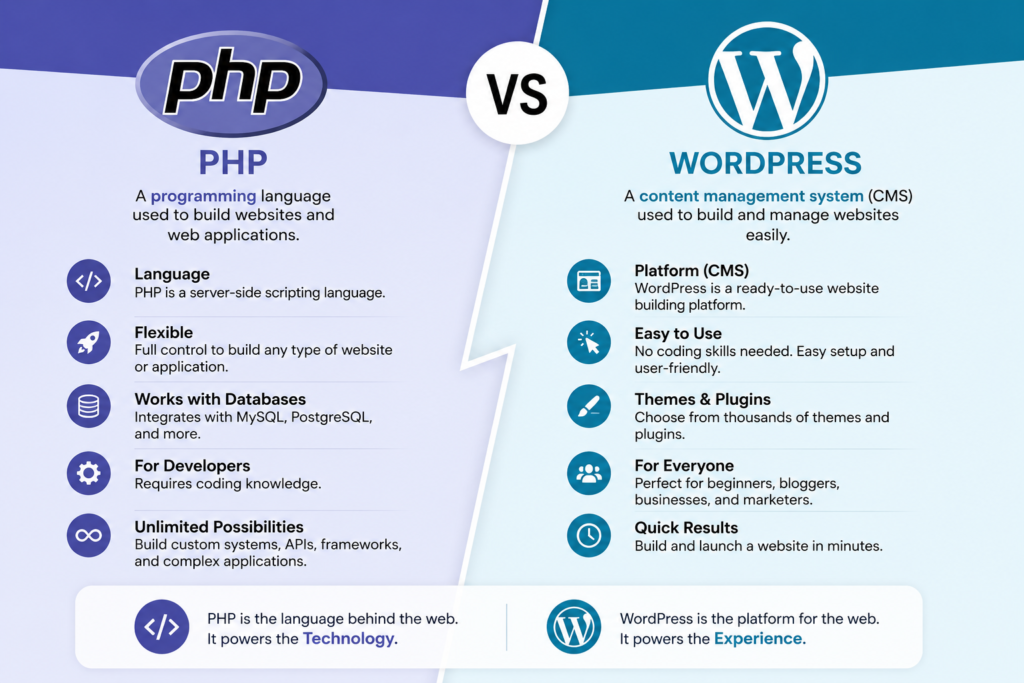
WordPress is an open-source content management system that now powers around 42% of all websites, according to W3Techs. It arrives with an admin dashboard, a theme system, and a huge plugin library, which is why a working site can go live within days. Custom PHP describes something different: a website or web application written specifically for one business, usually on a modern framework such as Laravel rather than loose scripts. Both sit on the same underlying language, PHP, yet they follow opposite philosophies. WordPress is built for speed of setup and simple editing. Custom PHP is built for control, because every line of code exists for a reason the business chose. Grasping that difference is the first step toward a sensible decision, and it is the reason a blanket verdict on which is better rarely survives contact with a real project.

wordpress vs php

Where WordPress wins

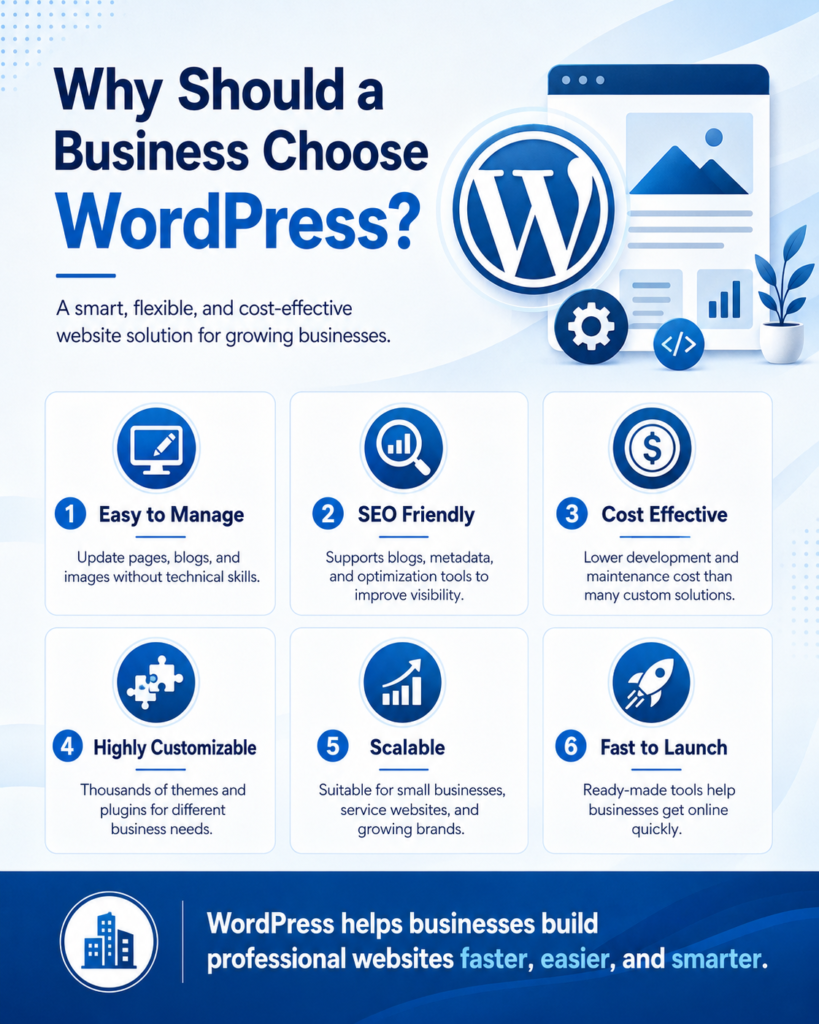
For a large share of projects, WordPress is the practical winner, and its greatest strength is speed to launch. A brochure site, a blog, or a modest online store can be live quickly because the core platform, themes, and plugins already exist. Budget benefits from the same logic, since a team assembles proven components instead of engineering each feature from zero. The plugin ecosystem is enormous, spanning everything from simple contact forms to full eCommerce through WooCommerce. Just as valuable, non-technical staff can publish and update content without touching code, which keeps a marketing team free of developer bottlenecks for routine changes. Solid WordPress development still calls for real skill in theme structure, plugin selection, and performance tuning, but for content-heavy sites that need frequent publishing and a predictable budget, the advantages are hard to match. That is why so many small and mid-sized businesses rely on a dependable WordPress service, and why agencies such as Scale Delight offer dedicated WordPress development services alongside fully custom builds.

Where custom PHP wins

Custom PHP earns its place when a project outgrows what a template can comfortably handle, and the clearest advantage is performance at scale. A bespoke application loads only the code it needs, with no plugin overhead or generic theme weight, so it holds up under heavy traffic and complex database queries. Security is a close second. The large majority of WordPress vulnerabilities come from third-party plugins and themes rather than the core software, according to security researchers such as Patchstack, whereas a custom build exposes only the components a business actually uses. Flexibility completes the case. When a company needs unusual logic, a custom booking engine, a bespoke pricing system, a customer portal, or a deep tie-in with an internal ERP or CRM, a custom PHP application can model those requirements exactly instead of forcing a plugin to fit. A well-structured codebase is also easier to maintain and extend across the years, which spares a business the technical debt that builds up when a WordPress site is stretched far beyond its purpose. This is where a specialist PHP service, one that understands both the language and the commercial goals behind it, tends to pay for itself.

The comparison that matters

A side-by-side view makes the trade-off concrete. The table below summarizes how the two approaches compare across the factors that most often decide a project.

Factor

WordPress

Custom PHP

Time to launch

Fast, uses ready-made components

Slower, everything is built to spec

Upfront cost

Lower for standard sites

Higher, reflects bespoke engineering

Scalability

Strong up to a point, needs care under heavy load

Designed for scale from the start

Security surface

Wider, driven by plugins and themes

Narrower, only what is built is exposed

Content editing

Simple for non-technical staff

Depends on the admin that is built

Flexibility

Constrained by plugins and themes

Almost unlimited

Long-term maintenance

Easy for simple sites, harder when heavily customized

Predictable with clean architecture

No single column wins every row, which is exactly the point. The right choice depends on which of these rows matters most to a particular business.

When a business should choose WordPress

WordPress is usually the smarter call when the priority is publishing content, launching fast, and keeping running costs in check. A company that needs a marketing website, a blog, a portfolio, or a standard online store, and whose team wants to manage updates in-house, will get strong value from it. A business that prefers a managed WordPress service, with hosting, updates, and security handled on its behalf, will also find the platform convenient. It suits organizations expecting steady rather than explosive growth, where requirements are well understood and unlikely to demand unusual functionality. In those cases, commissioning custom PHP would mean paying for control the business does not really need. The sensible path is to start on WordPress, harden it properly, and revisit the decision only if the project changes shape.

why choose wordpress

When a business should choose custom PHP

Custom PHP becomes the rational choice when a site starts to behave less like a brochure and more like software. Typical signals include traffic that strains a plugin-heavy WordPress setup, a sprawling set of plugins that has grown hard to maintain, security or compliance rules that demand tight control, and features no off-the-shelf plugin handles cleanly. Businesses building marketplaces, SaaS products, complex booking or quoting systems, and platforms with deep third-party integrations tend to reach this point sooner. When a company finds itself constantly fighting its own CMS to deliver what it needs, that friction is usually the cue to consider a bespoke build. Scale Delight approaches these projects through custom PHP development services that are engineered around the specific logic a business runs on, rather than bent to fit a template.

How a business should actually decide

The most reliable way to choose is to start from the business rather than the technology, and a short set of questions usually settles it. How quickly does the site need to launch, and how tight is the budget? How much unusual functionality does the business genuinely need? How much traffic and complexity will it carry over the next two to three years? And who will maintain and edit it day to day? When the answers lean toward speed, simplicity, and easy editing, WordPress is likely the right foundation. When they lean toward scale, control, and bespoke logic, custom PHP will serve the business better over time. As a Mumbai-based agency, Scale Delight builds both, so its web development services recommendation follows the project rather than a fixed preference. Talking through the specific requirements, expected traffic, and must-have features is the quickest way to settle on the right foundation before any code is written.

Final Thoughts

There is no universal winner in the custom PHP vs WordPress debate, and any honest answer resists a one-size-fits-all verdict. WordPress rewards businesses that value speed, simplicity, and easy content editing, while custom PHP rewards those that need scale, control, and logic a template cannot express. The smartest move is to match the technology to the problem in front of the business, not to a trend or a personal preference. Whether that points toward WordPress development services or a dedicated PHP service, a short and honest assessment of goals, growth, and in-house capacity usually settles the direction, and when it does not, a brief conversation with an experienced development team is enough to make the call.

FAQs

Q1. Is WordPress built on PHP?

Yes. WordPress is written in PHP, which is why the real choice is never PHP against WordPress. It is a decision between using a ready-made PHP content management system or commissioning custom PHP development services built specifically for one business.

Q2. Is custom PHP better than WordPress for SEO?

Neither is inherently better for SEO, and both can rank well when built correctly. WordPress offers strong SEO plugins out of the box, while custom PHP gives full control over performance, clean code, and Core Web Vitals. The quality of the build matters far more than the platform itself.

Q3. When should a business move from WordPress to custom PHP?

A move usually makes sense when a site struggles under a heavy load of plugins, when security or compliance needs tighten, or when the business needs features no plugin handles cleanly. Marketplaces, SaaS products, and complex portals are common reasons to make the switch.


Lets Get In Touch