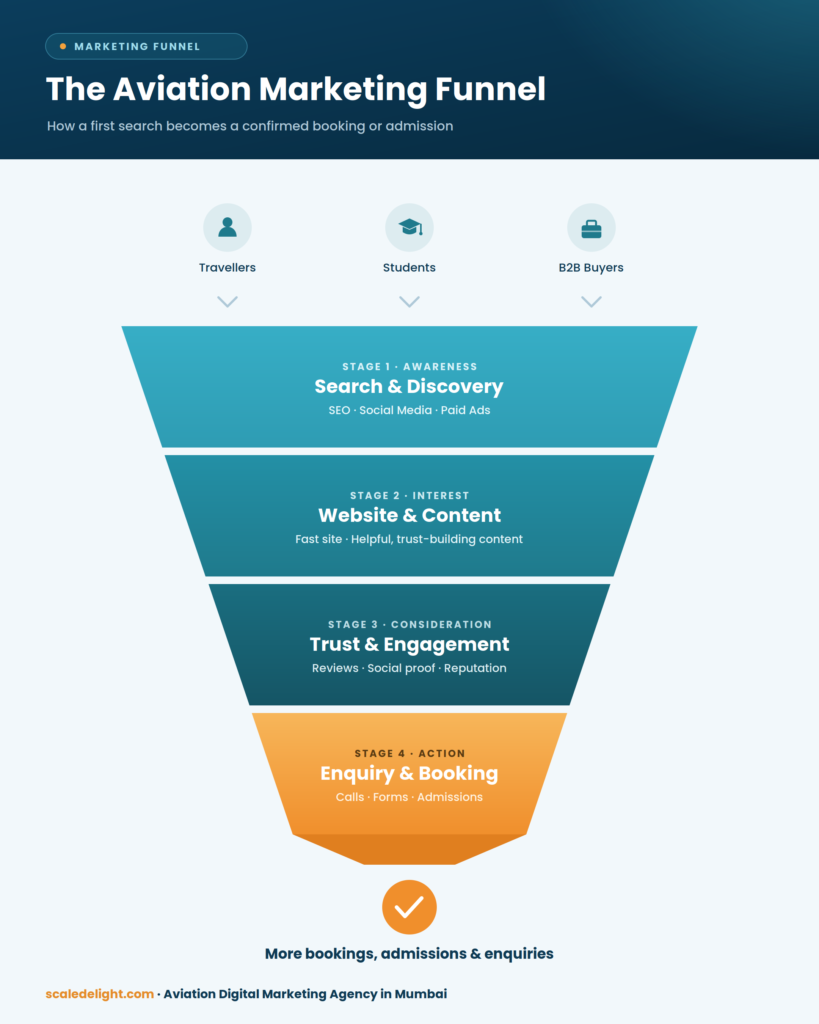
India’s aviation industry is taking off like never before. New airports are opening across the country, regional connectivity is expanding, flying schools are training a fresh generation of pilots, and drone and eVTOL startups are creating entirely new categories. With all this growth comes fierce competition, and today the brands that win customers are the ones that are easiest to find online.
For airlines, airports, flight schools, charter operators and aerospace companies, a strong digital presence is no longer optional. Travellers, students and business buyers all research online before they ever pick up the phone. That means visibility, trust and clear messaging now decide who gets the enquiry and who gets ignored.
This guide breaks down seven practical digital marketing strategies that aviation businesses in India can use in 2026 to attract more enquiries, bookings and admissions. Each one is simple to understand and built around the way aviation customers actually make decisions.
1. Build a Credibility-First Website
In aviation, trust is everything, and a website is usually the first impression a customer gets. A slow, outdated or confusing site sends the wrong signal, especially in an industry where safety and reliability matter so much.
A credibility-first website loads quickly, works perfectly on mobile, and makes it easy for visitors to find what they need. Whether someone is booking a charter flight, comparing flying schools or sourcing aerospace parts, the path to an enquiry should be clear and free of friction. Strong aviation websites usually include clear service pages, real photos, certifications, safety information and visible contact details. Trust signals such as testimonials, accreditations and case studies reassure cautious buyers, while a simple enquiry form or a prominent call button makes a real difference on mobile.
Investing in a professional website gives every other marketing effort a solid foundation. Ads and SEO can bring visitors in, but only a well-built website can turn them into customers.
2. Invest in Aviation SEO and Local SEO
Most aviation journeys begin with a Google search such as “best flying school in Mumbai,” “charter flight near me” or “MRO services in India.” If a business does not appear in those results, it simply misses out on customers who are ready to act.
Search engine optimisation, or SEO, helps aviation websites rank higher for the terms their customers are searching. This means optimising service pages, using the right keywords, improving site speed and building authority over time. Done well, SEO brings a steady flow of high-quality enquiries without paying for every click.
Local SEO is especially powerful for aviation businesses in India. With major hubs in Mumbai, Delhi, Bengaluru, Hyderabad and Chennai, ranking for city-based and “near me” searches can capture customers in exactly the right location. A well-optimised Google Business Profile, accurate listings and local reviews all help a brand show up when nearby customers search. Because aviation buying cycles are long, SEO also keeps a business visible across every stage of research, and the earlier customers discover a brand, the more likely they are to choose it when they finally decide.
3. Run Targeted Paid Ads for Fast Enquiries
SEO builds momentum over months, but paid ads can bring enquiries almost immediately. For aviation businesses that want quick results, such as filling a new flying school batch, promoting a seasonal travel offer or supporting a product launch, paid advertising is one of the fastest ways to reach the right people.
Google Search ads put a brand in front of customers at the exact moment they are searching for flights, courses or services. Social media ads on platforms like Instagram and Facebook help build awareness and capture leads through eye-catching visuals and simple lead forms. The key to aviation paid advertising is precise targeting. Campaigns can focus on specific cities, age groups, interests and intent, so the budget reaches people who are genuinely likely to convert.
This control over cost per lead matters in an industry where every enquiry can be valuable. With clear tracking and regular optimisation, paid ads deliver measurable results, so a business always knows what it is spending and what it is getting in return.
4. Use Social Media to Build Trust and Showcase Expertise
Aviation is visual, exciting and full of stories, which makes it perfect for social media. From a pilot’s first solo flight to behind-the-scenes maintenance work, aviation content naturally captures attention and builds an emotional connection.
A strong social media presence helps aviation brands stay top of mind and earn trust. Regular posts, reels and updates show that a business is active, professional and proud of its work. Student success stories, customer reviews, route announcements and team highlights all help build a loyal community. Social media also gives aviation businesses a human face, and in an industry where trust is critical, showing real people, real results and real safety standards reassures potential customers.
Beyond awareness, platforms like LinkedIn are valuable for B2B aviation players such as MRO providers and aerospace suppliers, helping them reach engineers, procurement teams and decision-makers. Used consistently, social media turns followers into enquiries and casual viewers into long-term customers.
5. Create Educational Content for Long Buying Cycles
Aviation customers rarely decide overnight. A student choosing a flying school, a company selecting an aerospace partner or a traveller booking a charter often spends weeks researching first, and helpful content guides them through that journey.
Educational content such as blogs, guides, FAQs and videos answers the questions customers are already asking. A flight school might explain how to become a commercial pilot in India, while a charter operator could outline what to expect when booking a private jet. This kind of content builds trust and positions a brand as a knowledgeable expert. It also supports SEO by targeting the many informational searches customers make before they buy, so every helpful article is another chance to appear in search results and bring new visitors in.
Most importantly, good content does the selling quietly. By the time a well-informed customer reaches out, they already trust the brand and are far closer to making a decision.
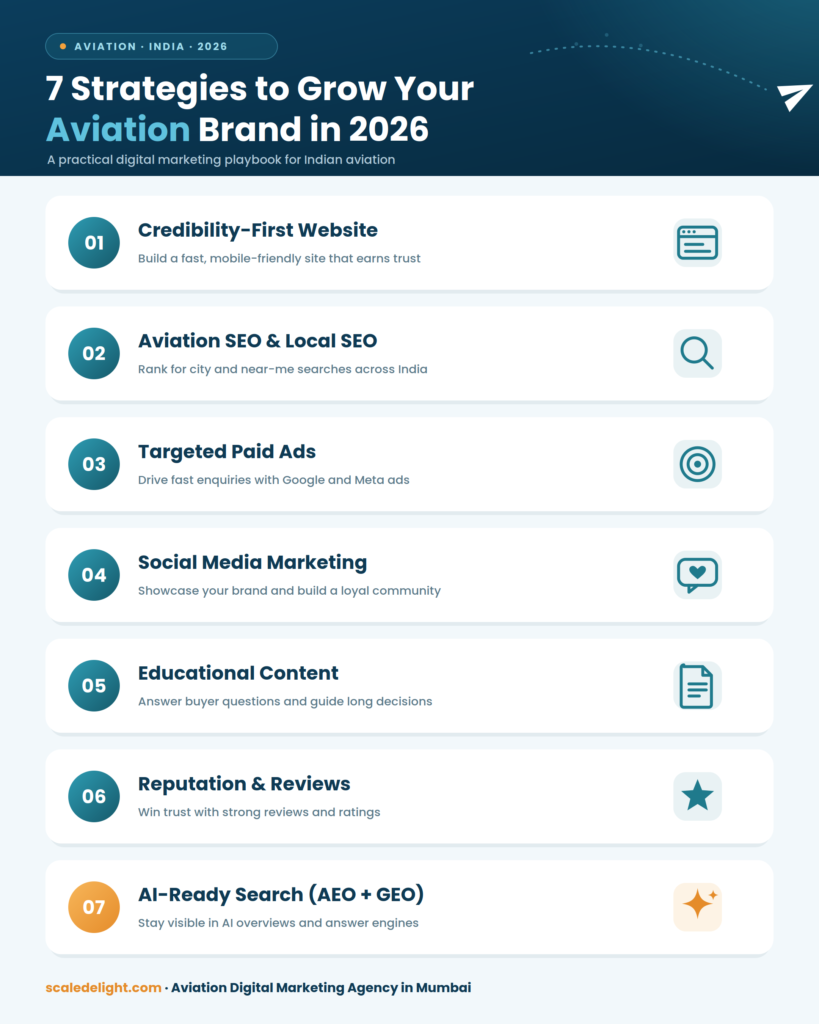
6. Manage Online Reputation and Reviews
In aviation, reputation can make or break a business. Customers are placing their safety, money and trust in a brand, so they pay close attention to what others say, and a handful of reviews can be the deciding factor between one provider and another.
Reputation management means actively monitoring reviews, responding to feedback and encouraging happy customers to share their experiences. Positive reviews on Google and social media build confidence, while thoughtful responses to criticism show that a business genuinely cares. For flying schools, charter operators and aviation suppliers, social proof is powerful, as testimonials, ratings and success stories reassure cautious buyers and reduce the doubt that comes with high-value decisions.
A strong, well-managed online reputation does more than attract customers; it protects the brand. In a high-trust industry, being seen as reliable and transparent is one of the most valuable marketing assets a business can have.
7. Optimise for AI Search (AEO and GEO)
The way people search is changing fast. More customers now ask AI tools and read Google’s AI overviews instead of scrolling through traditional results. Aviation businesses that adapt early will stay visible as search continues to evolve.
Answer Engine Optimisation (AEO) focuses on giving clear, direct answers to common questions, so a brand appears when customers ask things like “which is the best flying school in Mumbai.” Generative Engine Optimisation (GEO) helps content show up in AI-powered results and assistant responses. In practice, this means writing content that is clear, well-structured and genuinely helpful, with answers that AI tools can easily understand and surface. Strong technical foundations, accurate information and trustworthy signals all help a brand stay visible in this new search landscape.
For aviation businesses in India, this is a real opportunity. By preparing for AI search now, brands can stay ahead of competitors who are still relying only on older methods.
Final Thoughts
India’s aviation sector is growing quickly, and the brands that invest in digital marketing today will lead tomorrow. From a trustworthy website and strong SEO to paid ads, social media, content, reputation management and AI-ready search, these seven strategies work together to attract more enquiries, bookings and admissions.
The good news is that aviation businesses do not have to figure it all out alone. Partnering with a specialised aviation digital marketing agency in Mumbai can turn these strategies into real, measurable growth, with campaigns built specifically for the aviation industry. Ready to take an aviation brand to new heights? Scale Delight offers a free consultation to map out the right strategy for the business.
FAQs
Q1. Why does aviation need specialised digital marketing?
Aviation involves high-value decisions, long buying cycles and a strong focus on safety and trust. A specialised approach speaks the industry’s language and builds the credibility that generic marketing often misses.
Q2. How long does aviation SEO take to show results?
Paid ads can bring enquiries almost immediately, while SEO usually delivers meaningful results over a few months as rankings and authority build. Many businesses run both together for early wins alongside long-term growth.
Q3. Is digital marketing worth it for small aviation businesses?
Yes. A smart, focused strategy helps even smaller aviation businesses compete with larger players, attract the right customers and grow steadily without wasting budget.

Written by
Pratibha Sahani
SEO Strategist & Founder, Behind the Search
I bring years of hands on experience in technical SEO and organic growth strategy. I created Behind the Search to make powerful SEO tools accessible without expensive monthly subscriptions. Every article here is practical, tested in real scenarios, and written to help serious SEO professionals achieve measurable results.